
For a while, corporate interest in digital assets was mostly driven by headlines.
One company added Bitcoin to its balance sheet. Another explored tokenization. A few more participants began discussing blockchain pilots, stablecoin payments, or digital asset reserves. Back then, institutional adoption felt exciting, but it also felt experimental. Much of it was about being early, looking innovative, and demonstrating to the market that your company was paying attention to the future.
Now, that phase is changing.
The next stage of institutional adoption is not just about buying or holding digital assets. It is about figuring out how these assets actually fit inside a corporation’s financial systems. And that is a much bigger challenge. It means dealing with valuation rules, disclosures, internal controls, audit expectations, treasury policies, risk monitoring, and reporting standards. In other words, this is where digital assets stop being a flashy idea and start becoming a real accounting issue.
That is why this new phase can be called Institutional Adoption 2.0.
This second wave is more serious, more structured, and much less driven by hype. It is not just about whether corporations believe in digital assets. It is about whether they can manage them properly inside real-world finance operations. And with newer accounting standards beginning to give more direction, companies are starting to prepare in a more practical way.
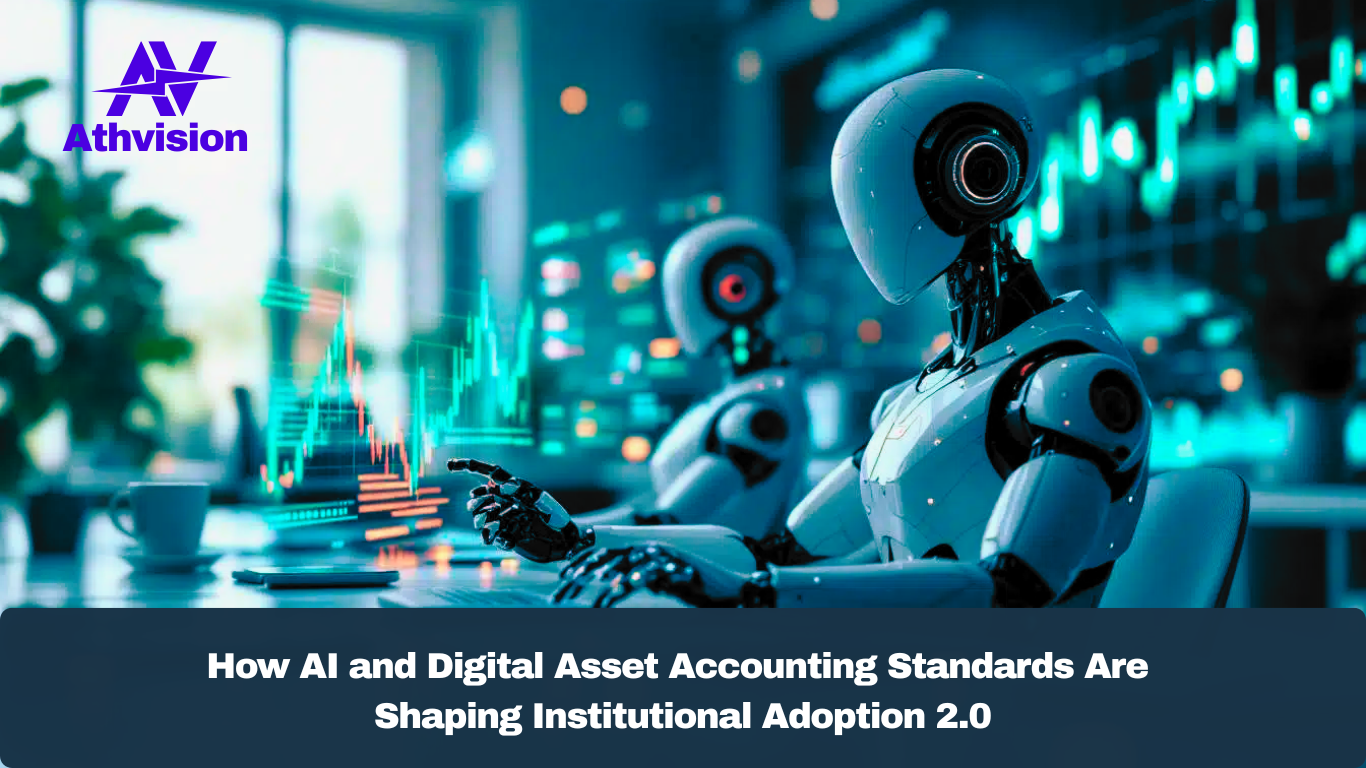
What makes this phase even more interesting is that corporations are not relying on accounting teams alone. Many are also bringing in AI tools to help deal with the complexity. As digital asset reporting becomes more detailed and fast-moving, AI is starting to support valuation checks, transaction monitoring, reconciliation, forecasting, and even audit preparation. So while accounting standards may be the foundation, AI is becoming part of the machinery that helps make large-scale adoption possible.
Why This New Phase Matters
The first wave of institutional adoption was mostly about access and exposure. The second wave is about infrastructure.
That difference matters because it changes the question corporations are asking. Instead of asking, “Should we hold digital assets?” they are now asking, “How do we classify them, measure them, report them, and control them without creating a mess in the books?
That is where accounting standards come in.
For years, one of the biggest problems with digital asset adoption at the corporate level was that the accounting treatment often felt out of step with economic reality. Companies could be interested in holding crypto or using blockchain-based assets, but if the reporting treatment made the results look confusing or unattractive, adoption naturally slowed down. Finance teams do not care only about innovation. They care about what happens at month-end, quarter-end, and during audit review
That is why clearer accounting rules are such a big deal. They do not just change the numbers on paper. They make corporations more comfortable with the idea that digital assets can be managed in a disciplined way.
Digital Assets Are Becoming a Finance Department Problem
That may sound negative, but it is actually a sign of maturity
When a new technology becomes a finance department problem, it usually means it is moving closer to mainstream adoption. Once boards, CFOs, controllers, auditors, and legal teams start taking it seriously, the conversation becomes less about trends and more about process. And the process is where real adoption happens.
Corporations preparing for digital asset accounting standards are now doing the kind of work that used to be ignored during the hype cycle. They are reviewing asset classification policies. They are building approval workflows. They are testing valuation procedures. They are examining how to reconcile blockchain records with internal ledgers. They are also thinking harder about disclosure language, custody arrangements, and risk oversight.
This is not the glamorous side of crypto. But it is the side that decides whether digital assets can actually stay on a corporate balance sheet without creating long-term headaches.
Where AI Enters the Picture
This is also where AI adds a fresh and important layer.
Digital assets create a lot of moving parts. Prices change constantly. Transactions happen across wallets and networks. Reconciliation can become messy. Disclosure requirements can grow more detailed. Internal monitoring becomes harder when a company holds multiple assets or interacts with multiple platforms.
AI helps by making these processes more manageable.
For example, companies can use AI-assisted systems to flag unusual wallet activity, scan large sets of transaction data for mismatches, support fair value reporting with faster data analysis, and generate internal summaries that help finance teams prepare for close periods. AI can also help model scenarios, such as how large swings in digital asset prices might affect earnings, liquidity, or treasury strategy.
This does not mean AI replaces accountants, auditors, or finance managers. It does not. Judgment still matters. Policy still matters. Governance still matters. But AI can reduce manual workload and help companies operate faster and more confidently in an environment that is still developing.
In a way, AI is becoming the quiet partner behind Institutional Adoption 2.0. The standards may tell corporations what needs to be done, but AI is helping them actually do it at scale.
How Corporations Are Preparing
1. Better classification of digital assets
Not every digital asset belongs in the same category. That is one of the first lessons corporations are learning.
A treasury reserve asset is not the same as a stablecoin used for payment flows. A token tied to a blockchain ecosystem is not the same as an asset held in custody on behalf of clients. Companies are being forced to define what they hold, why they hold it, and how that purpose affects accounting treatment
Without clear classification, everything gets harder later. Valuation becomes inconsistent. Reporting becomes messy. Disclosures become vague. Audit questions become more painful. So corporations are spending more time upfront on policy decisions.
2. More disciplined valuation and reporting systems
Digital assets may trade in live markets around the clock, but corporations still have to close their books on schedule. That creates a challenge. Finance teams need to decide which market data they rely on, what valuation methodology makes sense, and how to support those numbers when they are reviewed.
This is where AI can be especially useful. Instead of relying only on manual lookups and spreadsheet-heavy processes, companies can use intelligent systems to pull pricing inputs, compare sources, identify anomalies, and speed up reporting support. The result is not perfect automation, but a more efficient reporting environment.
3. Stronger controls around wallets and approvals
Traditional assets do not always create the same operational risks that digital assets do. When a corporation holds digital assets, internal controls become critical. Questions immediately arise. Who controls the wallets? Who can approve transfers? Who reviews movements? What happens if access is lost? How are keys protected? How is fraud detected?
These are not small issues. A corporation might be excited about digital asset adoption, but if it cannot answer these control questions clearly, then that adoption is still immature.
AI can support this area too by helping monitor patterns, detect suspicious activity, and improve visibility across digital asset movements. Again, it is not a replacement for governance, but it adds another layer of protection and oversight.
4. Preparing for more scrutiny from auditors and regulators
Once digital assets move into mainstream corporate use, scrutiny naturally increases. Auditors want support for valuations, ownership, access controls, and disclosures. Regulators want transparency and clarity. Investors want to understand not only what a company holds, but also what risks come with those holdings.
That means corporations are preparing for more than just technical compliance. They are preparing for an explanation. They need to explain digital assets in a way that makes sense to stakeholders who may not care about blockchain technology at all. What they care about is whether the numbers are reliable, whether the risks are controlled, and whether management understands what it is doing.
Advantages of Institutional Adoption 2.0
1. It makes corporate digital asset use more sustainable
The biggest advantage of this new phase is that it is more durable. Instead of being driven mainly by excitement, it is being built around systems, reporting, and accountability. That gives digital asset adoption a much stronger foundation.
2. Clearer standards encourage more participation
When corporations feel that accounting treatment is becoming more practical and easier to explain, they are more likely to move forward. Uncertainty has always been one of the biggest barriers to adoption. Better standards reduce that hesitation.
3. AI improves operational efficiency
AI can help finance teams handle the complexity that comes with digital assets. From reconciliation to monitoring to scenario analysis, it can save time and reduce manual pressure. That makes digital asset management more realistic for large organizations.
4. Better controls improve trust
As corporations strengthen governance around digital assets, trust improves. Investors, boards, and auditors tend to respond more positively when companies can show clear policies, strong controls, and solid reporting discipline.
5. It pushes digital assets closer to the financial mainstream
Once corporations can treat digital assets as something that fits into actual financial operations, these assets start to look less like speculative experiments and more like part of a maturing financial system.
Disadvantages of Institutional Adoption 2.0
1. It can still create earnings volatility
Even with improved accounting treatment, digital assets remain volatile. That means companies may still face large swings in reported results, which can make earnings harder to explain and harder for some investors to digest.
2. Implementation can be expensive
Preparing for digital asset accounting is not cheap. Companies may need better systems, outside advisers, stronger controls, legal review, audit support, and employee training. Adding AI tools on top of that can improve efficiency, but it also adds cost and complexity.
3. Standards are still not fully unified everywhere
One challenge for multinational corporations is that different jurisdictions may still apply different approaches. That creates inconsistency, more reporting complexity, and extra work for finance teams operating across borders.
4. AI adds its own risks
While AI is helpful, it is not magic. It can make errors, misunderstand data, or create false confidence if companies rely on it too heavily. Poorly used AI can introduce new risks instead of solving old ones. Human oversight still matters.
5. Corporate adoption may become too cautious
As more rules, controls, and review layers are added, some corporations may become overly cautious and move too slowly. In trying to reduce every risk, they may delay useful innovation or miss practical opportunities in tokenization, payments, or treasury modernization.
Conclusion
Institutional Adoption 2.0 is a very different story from the first chapter of corporate crypto adoption.
This time, the excitement is not just about buying digital assets or announcing blockchain experiments. It is about something more important: whether corporations can actually build the accounting, reporting, and control systems needed to manage these assets properly.
That is what makes this stage more meaningful.
Digital assets are no longer just a trend for bold treasury bets or innovation headlines. They are becoming part of a broader financial and operational discussion. Corporations now have to think about classifications, disclosures, internal controls, and audit readiness. And as that complexity grows, AI is starting to play an important supporting role by helping finance teams process data, monitor risks, and handle reporting demands more efficiently.
In simple terms, the future of institutional adoption will not be decided only by market enthusiasm. It will be decided by whether companies can make digital assets work inside real corporate systems.
That is why accounting standards matter so much. And that is also why AI gives this story more flavor.
Because the next era of digital asset adoption is not just about owning the future. It is about being able to account for it, control it, explain it, and operate it with confidence.