
For years, blockchain technology was largely associated with cryptocurrencies, speculative trading, and decentralized finance experiments. While these innovations helped demonstrate the potential of blockchain, many institutional investors remained cautious, waiting for practical use cases that could solve real business problems.
Today, one of the strongest candidates for mainstream blockchain adoption is Real-World Asset (RWA) tokenization.
From government bonds and real estate to private credit and commodities, institutions are increasingly exploring how traditional assets can be represented and traded on blockchain networks. What was once considered a niche concept is now becoming a serious area of focus for banks, asset managers, financial infrastructure providers, and regulators worldwide.
The reason is simple: tokenization has the potential to make financial markets more efficient, accessible, transparent, and liquid.
As blockchain technology matures and regulatory frameworks continue to evolve, the tokenization of real-world assets is emerging as one of the most important trends shaping the future of finance.
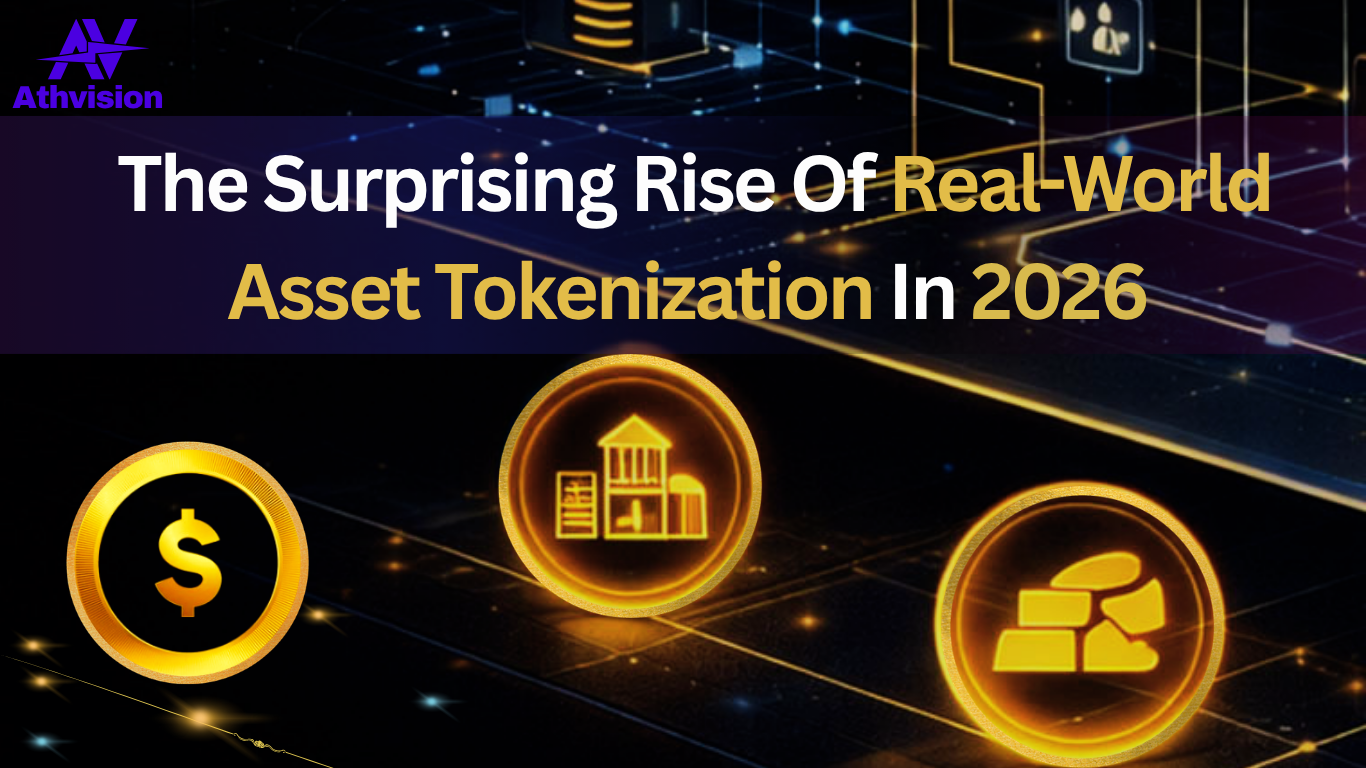
What Is Real-World Asset Tokenization?
Real-world asset tokenization refers to the process of converting ownership rights of a physical or traditional financial asset into digital tokens recorded on a blockchain.
These tokens represent a claim on the underlying asset and can often be transferred, traded, or managed digitally.
Examples of tokenized assets include:
- Real estate properties
- Government bonds
- Corporate bonds
- Treasury bills
- Private credit funds
- Commodities such as gold
- Infrastructure investments
- Fine art and collectibles
- Equities and securities
Instead of relying solely on traditional financial infrastructure and intermediaries, ownership records and transactions can be managed through blockchain-based systems.
Think of tokenization as creating a digital representation of an asset that can move more efficiently across financial networks.
The underlying asset remains real and legally recognized, but ownership becomes programmable and easier to manage.
Why Traditional Markets Need Improvement
Global financial markets manage trillions of dollars in assets, but many systems still rely on processes that were built decades ago.
Some of the common challenges include:
- Slow Settlement Times
Many financial transactions require multiple intermediaries and reconciliation processes before ownership is officially transferred.
In some markets, settlement can take several days.
- Limited Liquidity
Assets such as private equity, commercial real estate, and infrastructure projects are often difficult to buy or sell quickly.
Investors may need to hold positions for years before finding a buyer.
- High Administrative Costs
Custodians, transfer agents, brokers, clearinghouses, and legal processes all add costs to transactions.
- Limited Access
Many investment opportunities are available only to institutional investors or individuals with significant capital.
- Fragmented Data
Ownership records, compliance requirements, and transaction histories are often spread across multiple systems and organizations.
Tokenization aims to address many of these inefficiencies by creating a shared, transparent infrastructure for asset ownership and transfers.
Why Institutions Are Taking RWA Seriously
Institutional interest in tokenization has accelerated significantly over the past few years.
Unlike some blockchain applications that remain speculative, tokenized assets solve problems that institutions already face today.
- Improved Efficiency
Blockchain networks can streamline settlement processes by reducing the number of intermediaries involved in a transaction.
Instead of waiting several days for ownership transfers and reconciliation, transactions can potentially settle much faster.
For financial institutions handling large transaction volumes, even small efficiency gains can translate into substantial cost savings.
- Increased Transparency
Blockchain ledgers provide a clear and auditable record of transactions.
This can help reduce operational errors, improve compliance reporting, and simplify auditing processes.
Institutions value transparency because it helps manage risk and build trust among participants.
- Greater Liquidity
One of the most discussed benefits of tokenization is the possibility of improving liquidity for traditionally illiquid assets.
By representing ownership through digital tokens, assets can potentially be divided into smaller units and traded more easily.
This creates opportunities for broader market participation and more active secondary markets.
- Enhanced Accessibility
Tokenization can lower investment minimums and allow investors to gain exposure to asset classes that were previously difficult to access.
For institutions seeking to expand investor participation, this creates new possibilities.
- Programmability
Digital assets can incorporate automated rules through smart contracts.
These rules can handle tasks such as:
- Interest payments
- Dividend distributions
- Compliance checks
- Ownership transfers
- Reporting requirements
Automation reduces manual work while improving operational consistency.
The Rise of Tokenized Treasury Products
One of the fastest-growing areas within the RWA sector is tokenized government debt.
Treasury securities are considered among the safest and most widely used financial instruments in the world.
By bringing these assets onto blockchain networks, institutions can combine the stability of traditional government debt with the efficiency of digital infrastructure.
Tokenized treasury products have gained attention because they offer:
- Yield-generating opportunities
- On-chain transparency
- Faster settlement
- Integration with digital asset ecosystems
This segment has become particularly attractive as higher interest rates have increased demand for low-risk income-generating assets.
For many market participants, tokenized treasuries represent an important bridge between traditional finance and blockchain-based markets.
Real Estate: A Natural Fit for Tokenization
Real estate has long been viewed as one of the most promising use cases for tokenization.
Property investments often face several challenges:
- High entry costs
- Limited liquidity
- Complex ownership structures
- Administrative burdens
Tokenization can potentially address many of these issues.
A commercial property worth $10 million, for example, could be divided into thousands of digital ownership units.
Investors could purchase smaller portions instead of committing large amounts of capital.
This model may help create more flexible investment opportunities while opening access to a broader range of participants.
Although large-scale adoption is still developing, institutional interest in tokenized real estate continues to grow.
Private Credit and Alternative Assets
Another major area attracting institutional attention is private credit.
Private credit markets have expanded rapidly over the past decade, but they often remain difficult to access and trade.
Tokenization can help improve:
- Transparency
- Reporting
- Ownership management
- Secondary market activity
As private credit becomes increasingly important within institutional portfolios, blockchain-based infrastructure may help modernize how these assets are issued and managed.
The same applies to alternative investments such as infrastructure projects, renewable energy assets, and specialized investment funds.
Why Major Financial Institutions Are Getting Involved
Perhaps the strongest signal that RWA tokenization matters is the growing participation of traditional financial institutions.
Banks, asset managers, custodians, and market infrastructure providers are no longer simply observing developments from the sidelines.
Many are actively conducting pilot programs, launching tokenized investment products, and building blockchain capabilities.
Several factors are driving this shift:
- Client Demand
Institutional clients increasingly want access to digital asset opportunities.
Financial firms are responding by exploring new products and services.
- Competitive Advantage
Organizations that successfully integrate tokenization may gain operational efficiencies and new revenue opportunities.
- Future-Proofing Infrastructure
Many institutions recognize that financial infrastructure is evolving.
Participating early allows firms to build expertise and prepare for future market developments.
- Regulatory Progress
Although regulations continue to evolve, many jurisdictions have made meaningful progress toward establishing frameworks for digital assets and tokenized securities.
Greater regulatory clarity encourages institutional participation.
- Challenges Still Remain
Despite the enthusiasm surrounding tokenization, several challenges must still be addressed before widespread adoption occurs.
- Regulatory Uncertainty
Different jurisdictions continue to develop their approaches to digital assets and tokenized securities.
Cross-border compliance remains complex.
- Interoperability
Financial institutions use many different systems and blockchain platforms.
Ensuring seamless communication between networks remains a work in progress.
- Legal Frameworks
Ownership rights, custody arrangements, and investor protections must be clearly defined and enforceable.
- Market Education
Investors, institutions, and regulators still need a deeper understanding of how tokenized assets function.
Education and adoption often take time.
- Liquidity Development
While tokenization can improve liquidity, active secondary markets must still be built and supported.
Technology alone cannot create liquidity without sufficient market participation.
The Bigger Picture
The discussion around tokenization is no longer centered on whether blockchain can support financial assets.
The technology has already demonstrated that it can.
The more important question now is how quickly institutions will adopt these systems and which asset classes will benefit the most.
Historically, major financial innovations often take years or even decades to become mainstream.
Electronic trading, online banking, and digital payments all followed similar paths.
Early experimentation gradually evolved into widespread adoption once infrastructure, regulations, and user confidence matured.
Tokenized assets may be following a similar trajectory.
Institutional adoption does not happen overnight, but the direction of travel is becoming increasingly clear.
Conclusion
Real-world asset tokenization represents one of the most compelling applications of blockchain technology because it connects digital infrastructure with tangible economic value.
Unlike purely speculative digital assets, RWAs are tied to assets that already exist within global financial markets.
This creates a practical and understandable use case that appeals to institutions, regulators, and investors alike.
As technology improves and regulatory frameworks become more defined, tokenized assets could play an increasingly important role in how capital markets operate.
Whether through tokenized treasuries, real estate, private credit, or alternative investments, the trend points toward greater efficiency, transparency, and accessibility.
Institutions are paying attention because tokenization is no longer just a blockchain experiment.
It is becoming a serious financial innovation with the potential to reshape how assets are owned, managed, and traded in the years ahead.
While challenges remain, the momentum behind real-world asset tokenization continues to grow, and many believe it could become one of the defining developments in the next generation of global finance.